aeris by iRobot

Leading the digital transition from Aeris to iRobot

Designed the e-commerce experience for launching air purifiers inside the iRobot ecosystem while preserving trust, clarity and conversion performance.
Check it out
Figma logo with stylized letter F in blue, red, green, and purple circles on dark background.
Project: Website Transition & Redesign
My Role:
UX/UI Designer
Duration: 4 months
Scope: PDP Design, Bundle Architecture, Cart Optimization
Team: PM, Marketing, Engineering
To comply with the NDA, limited information is shared the following case study ⚠️ This product is NOT in the market yet ⚠️
summary
problem
Aeris needed to transition into the iRobot ecosystem without losing brand recognition, customer trust or purchase confidence.
what i did
Designed the e-commerce experience, including the product page, bundle strategy and cart flow, while supporting a phased migration through Aeris by iRobot.
outcome
A smoother transition that balanced continuity with stronger ecosystem alignment and clearer purchasing journeys.
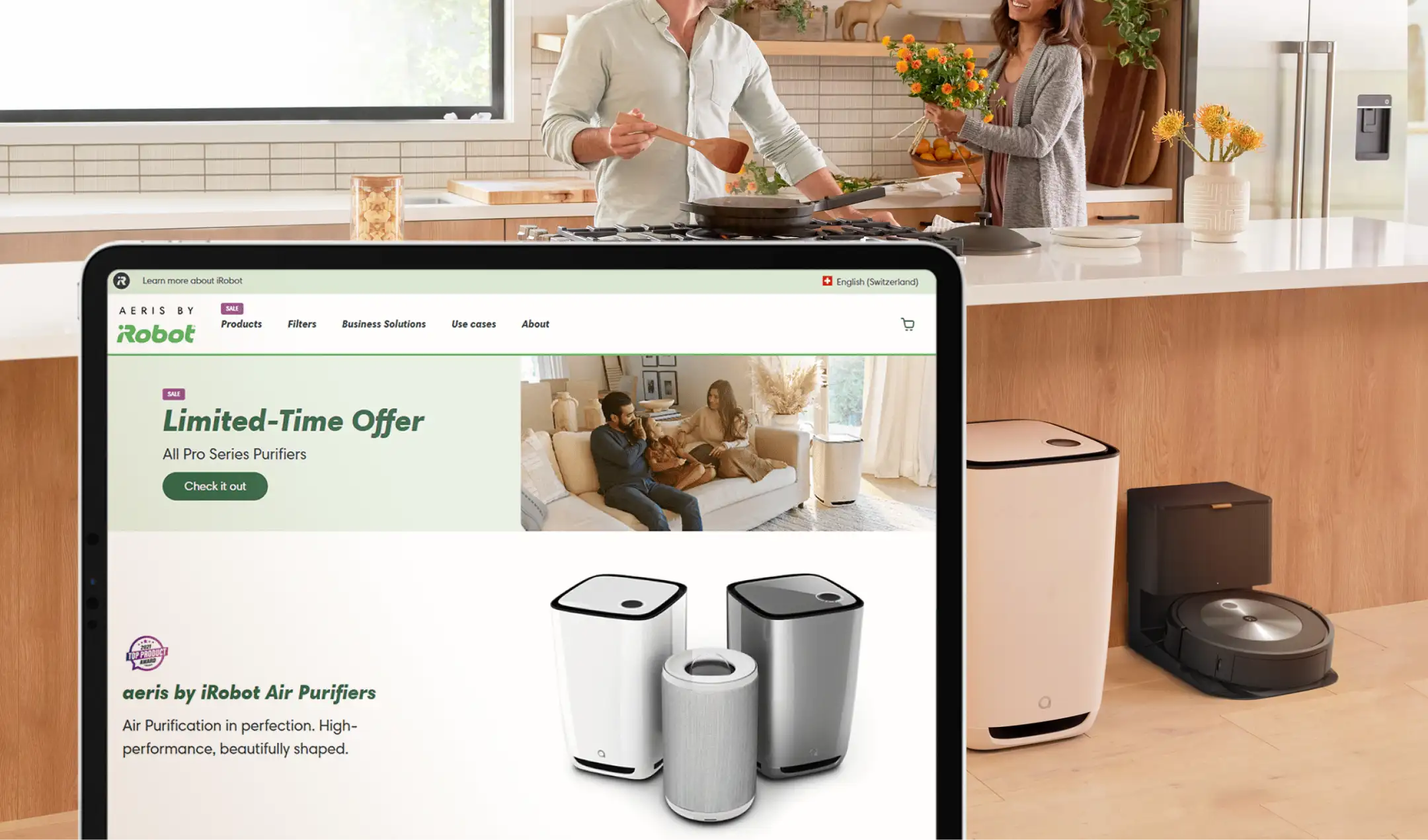
aeris by iRobot air purifiers in a modern kitchen while a couple cooks, representing a healthy home environment.
TRANSITION STRATEGY

A phased brand migration built on trust

Aeris had established recognition in the air-purifier market.
A sudden switch to iRobot could create confusion for existing customers.

To ease the transition, a hybrid identity — Aeris by iRobot — was introduced across the website experience.

This preserved familiarity while gradually building confidence in the iRobot ecosystem.
Laptop mockup displaying the aeris by iRobot website with air purifier product pages and details.
challenge & approach

The challenge

Brand challenge
How do you introduce a non-robot product into a robotics-led ecosystem without confusing users?

E-commerce challenge
Air purifiers involve filters, replacements and accessories, which can create decision fatigue.

Conversion challenge
Bundles can increase perceived value, but also friction if poorly structured.

Approach

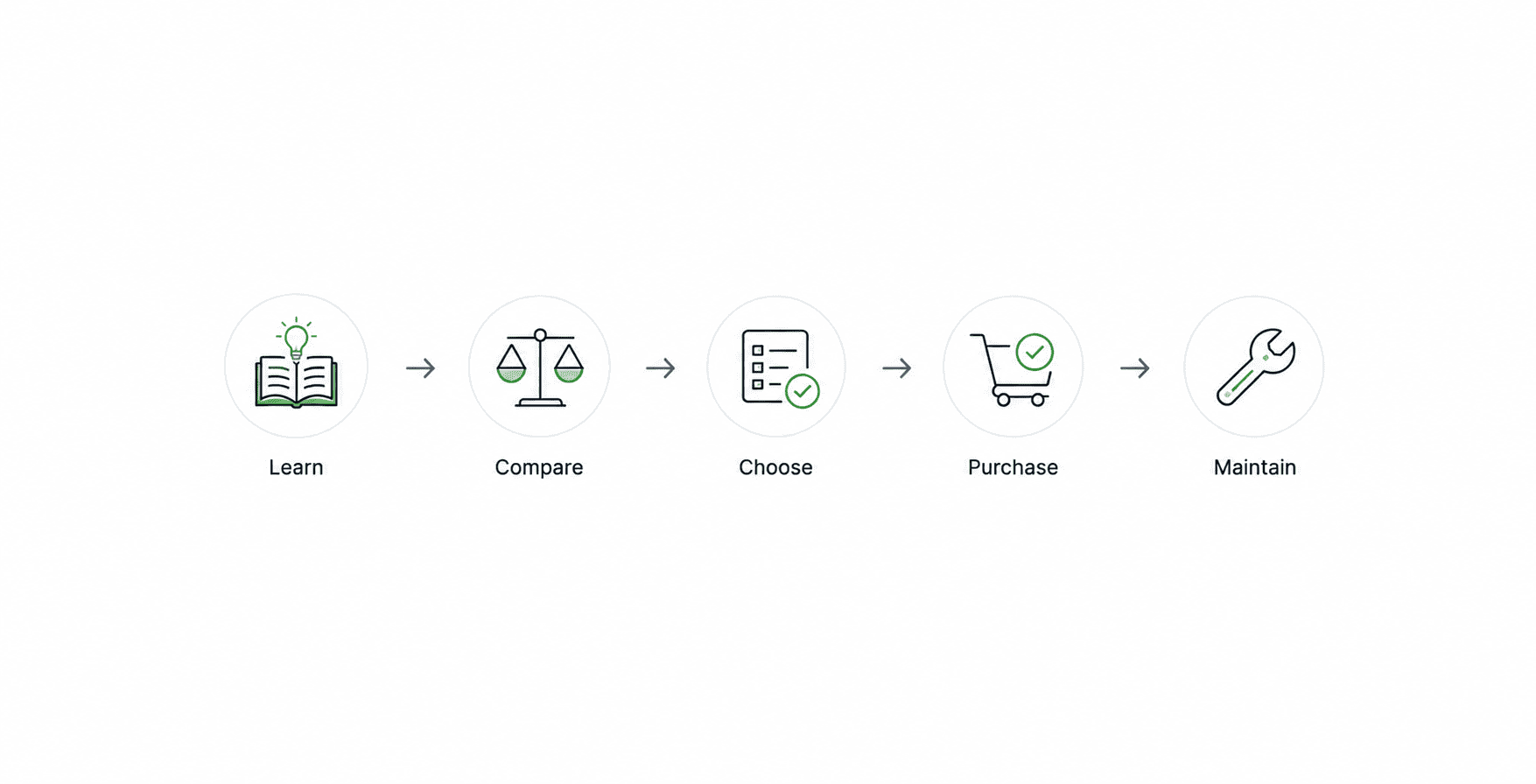
Before designing, I focused on three key principles:

1. Clarity over feature density

Technical information needed to feel understandable and easy to scan.

2. Decision architecture, not upselling

Bundles should feel helpful, not promotional.

3. Consistency with flexibility

The experience had to align with iRobot patterns while adapting to a new product category.
PRODUCT DETAIL PAGE
The PDP was designed to balance education, trust and conversion.The PDP was designed to balance education and conversion.

Key decisions

Structured information hierarchy

Benefits were surfaced before technical specifications to reduce cognitive load.

Progressive education

Content was layered to support different levels of curiosity.

Trust reinforcement

Spacing, certifications and visual clarity increased confidence.

Ecosystem alignment

The page followed iRobot design patterns while introducing a stationary product category.
Laptop mockup displaying the aeris by iRobot website with air purifier product pages and details.
aerie by iRobot online shop product page
bundle strategy
Air purifiers require recurring filter replacements and accessories.
Without clear guidance, too many options can reduce confidence.

UX decisions

Curated bundles instead of customizable configurations
Clear price anchoring and savings communication
Contextual explanation of why filters matter
Seamless transition of bundle information into the cart

Architecture

Air purifiers require recurring filter replacements and optional accessories.
Without clear guidance, this can increase decision fatigue and reduce conversion.

The challenge was not to sell more, but to structure choices in a way that reduced friction.

Key UX Consideration

How many bundle options are too many?
Where should bundles appear in relation to the main CTA?
How do we communicate savings without overwhelming the user?
How do we avoid creating doubt at the cart stage?

UX decisions

Curated bundles instead of customizable configurations
Clear price anchoring and savings communication
Contextual explanation of why filters matter
Seamless transition of bundle information into the cart
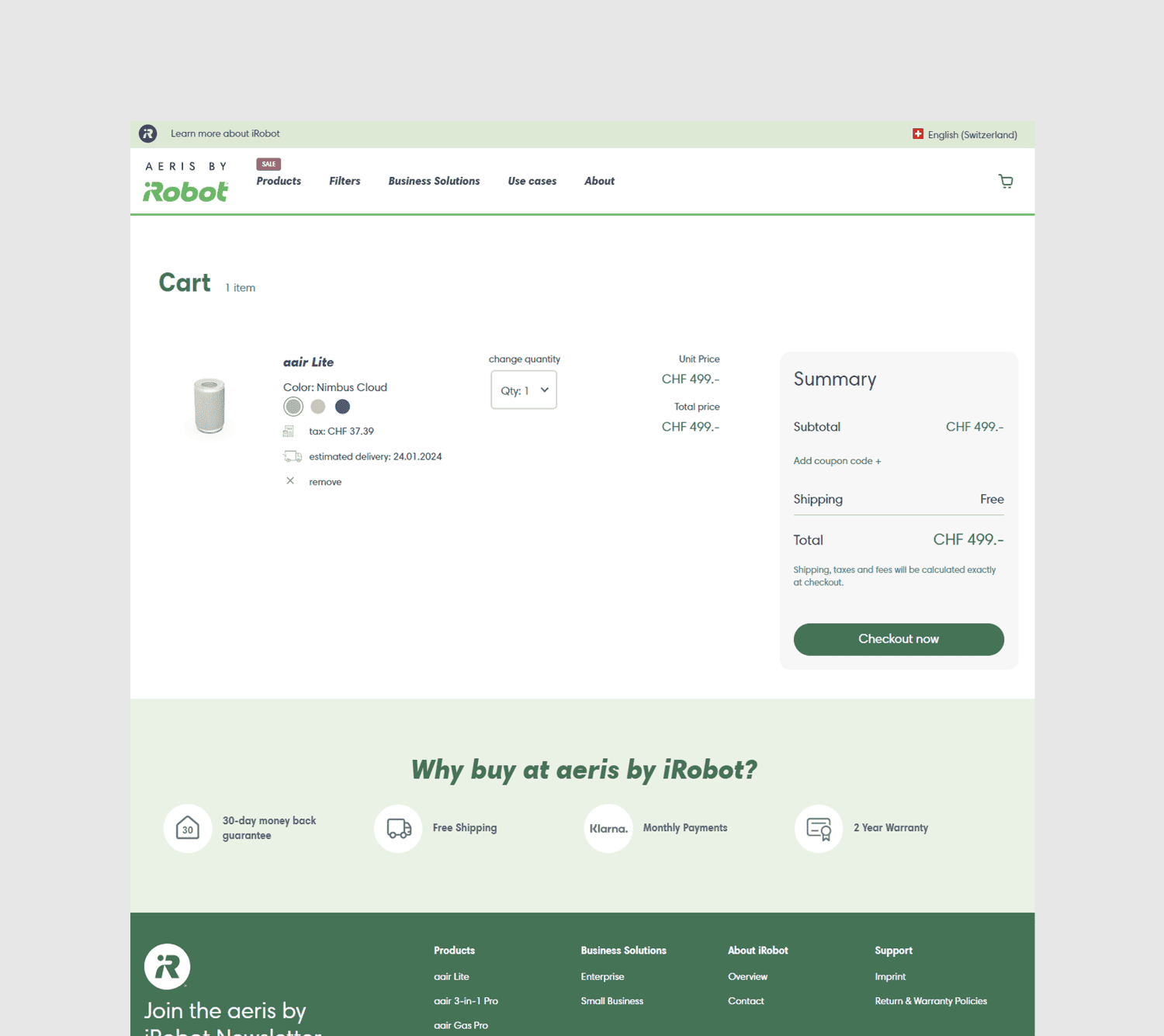
Cart Experience Optimization
The cart experience was redesigned to reduce uncertainty at the final decision stage.Introducing bundles required adjustments to the cart experience.

Improvements

Clear visibility of included bundle components
Persistent savings communication
Easy editing without disrupting the purchase flow
Cleaner visual hierarchy in the cart summary
Shopping cart page of aeris by iRobot showing a selected air purifier, order summary, and checkout button.
Shopping cart screen of the aerie by irobot online shop
outcome
Successful integration of a new product category into the iRobot ecosystem
Stronger value perception through clearer bundles
Scalable PDP framework for future category expansion
More friction-aware cart experience
Smoother transition from Aeris to iRobot branding
Key Learnings
Designing for e-commerce is designing for decision-making.

Introducing a new category into an established brand requires balancing:
• Consistency
• Education
• Simplicity
• Business objectives
• Customer trust

This project strengthened my understanding of conversion-focused UX and how to turn complexity into clarity.

Final designs
Some screenshot taken from the aeris wbsite
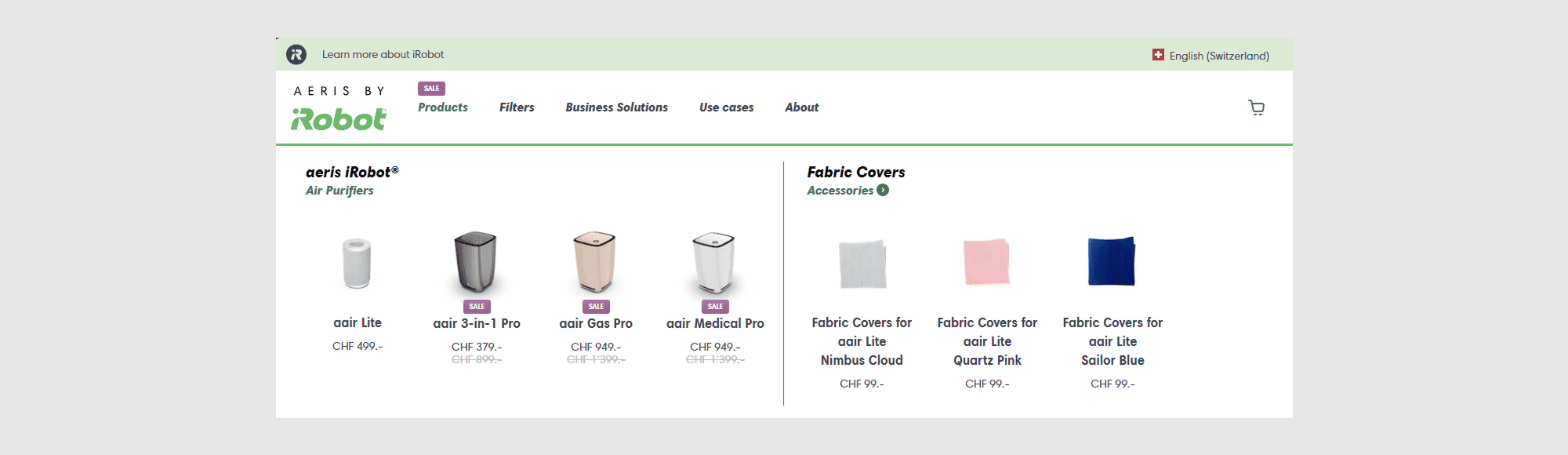
Product landing page created to support the purifier launch across the iRobot ecosystem.
Some screenshot taken from the aeris wbsite
Product landing page created to support the purifier launch across the iRobot ecosystem.
Some screenshot taken from the aeris wbsite
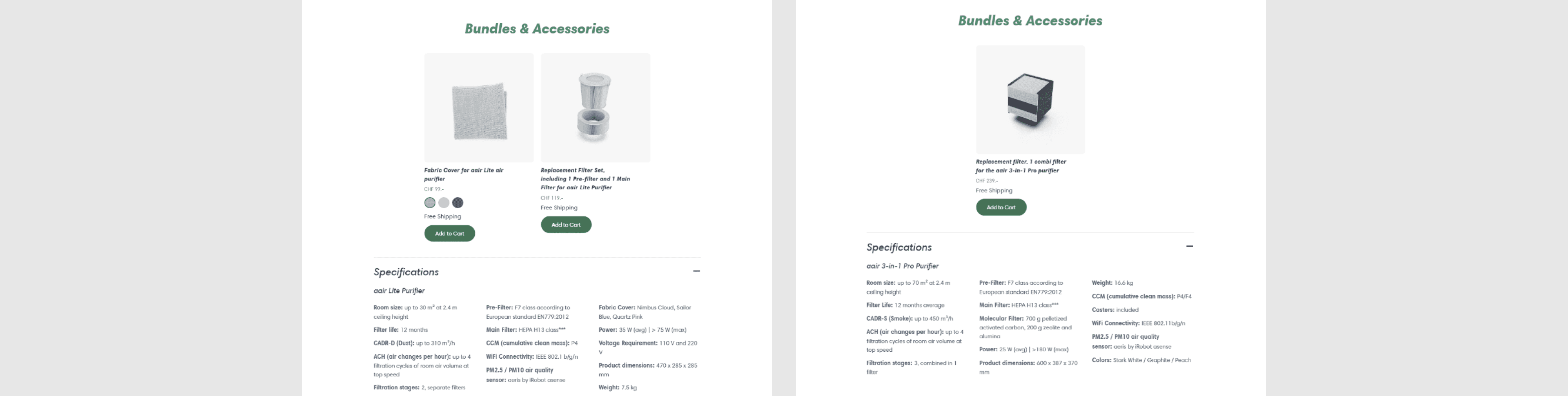
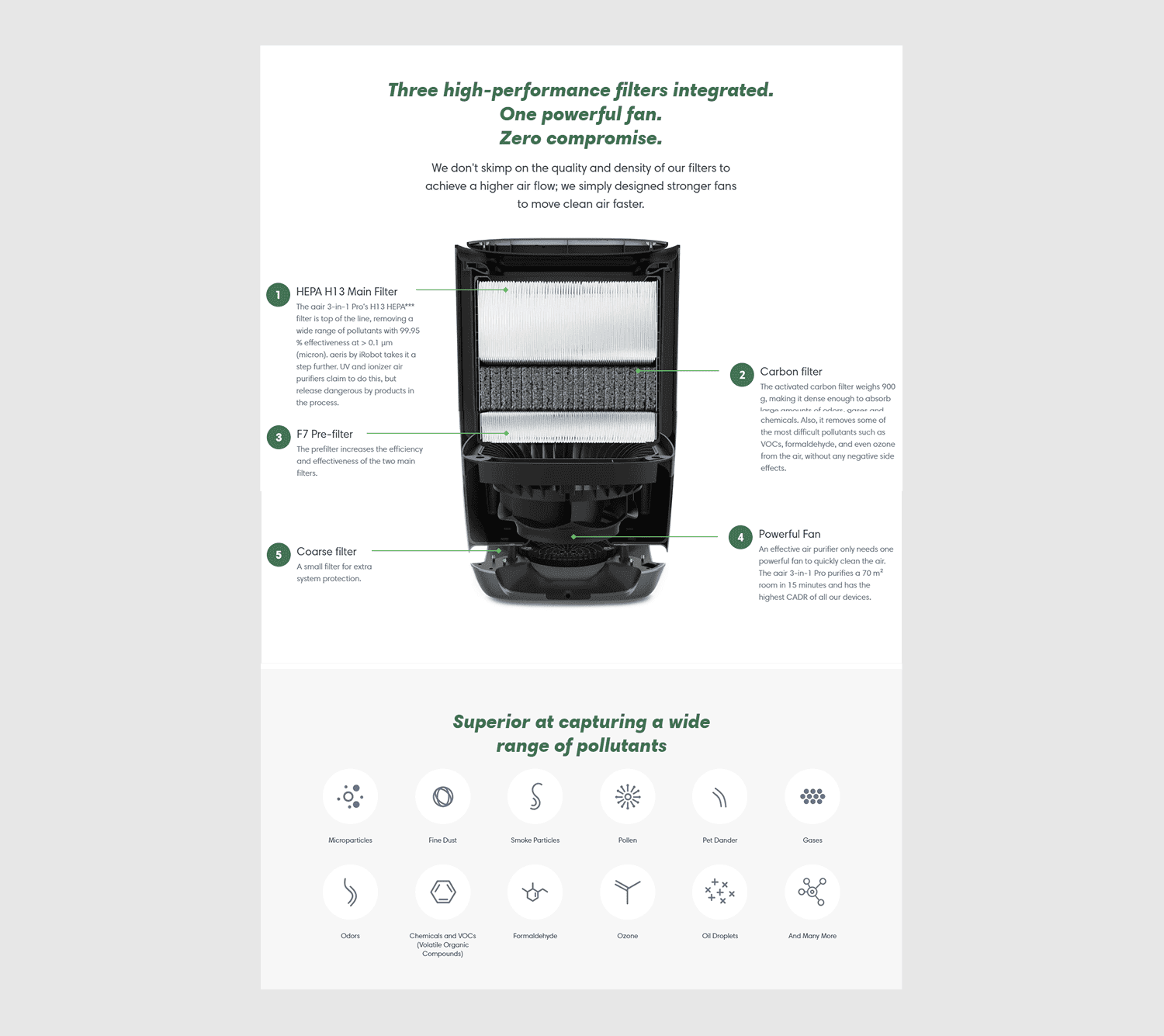
E-commerce product detail layout explaining key features, modes and filters
Let's work together

If your product feels complex or hard to use, feel free to reach out.

Get in Touch

More projects

View more work