Nobody Knows What “Speed 3 of 5” Means
Our first concepts for the iRobot air purifier app exposed the machine's settings. Testing showed that people don't think in fan speeds or particle counts. They think in outcomes.

Back to journal
Written date
November 2026
Category
UX Design
Nobody Knows What “Speed 3 of 5” Means
Published November 2026 · 3 min read
Air purifiers are simple machines with complicated data.
Particulate matter, VOCs, allergens, fan speeds, filter status. All of it is measurable, and all of it is tempting to show.
On the iRobot air purifier app, our first concepts did exactly that.
What we tried first
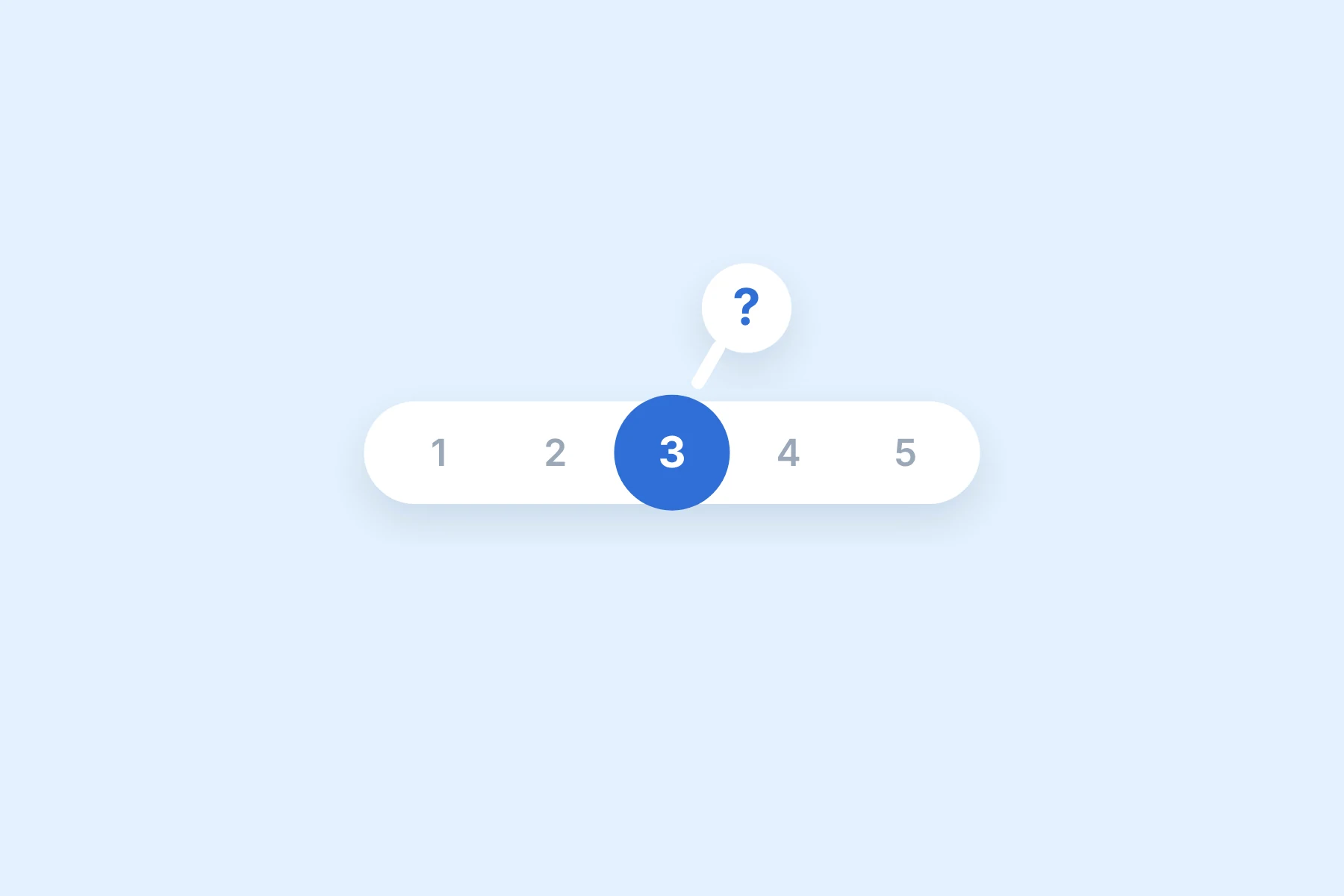
For fan control, we explored a slider mapped to raw fan speeds from 1 to 5, and a dial with numeric setpoints.
Both ran into the same problem in early feedback: users had no mental model for what “speed 3 of 5” actually meant.
Is it strong? Quiet? Enough for a bedroom?
The interface was speaking the machine's language, not the user's.
The same problem, twice
Air quality data had the same issue.
Our first concepts showed live PM2.5, PM10 and VOC readings as separate numbers, each with its own historical chart.
In testing, most users couldn't tell whether a reading was good or concerning. The numbers were accurate. They just didn't lead to any action.
What we did instead
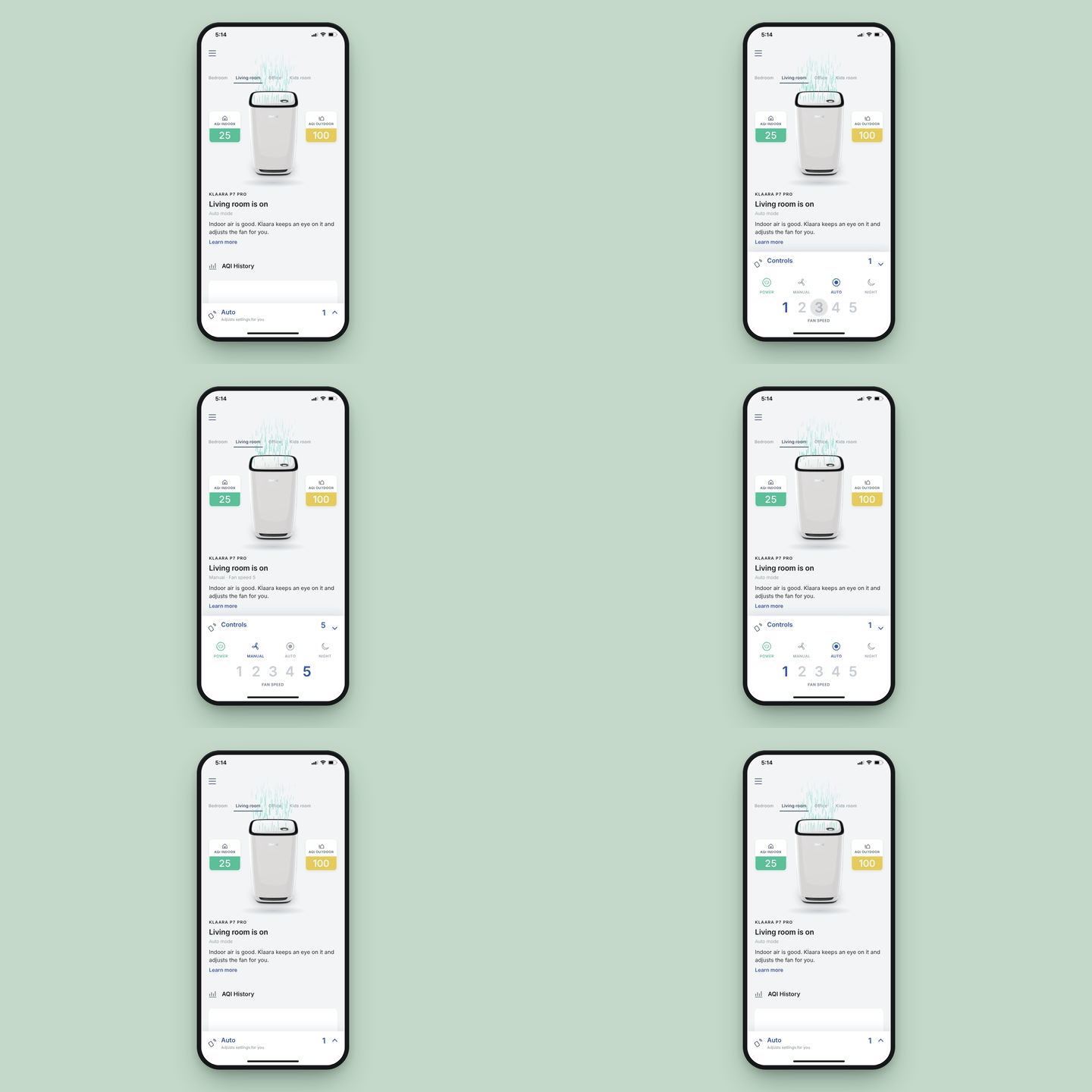
Fan control became three modes: Manual, Auto and Sleep.
Air quality became a single state, Good, Moderate or Unhealthy, with the detailed pollutant breakdown one tap deeper for anyone who wanted it.
We gave up some fine-grained control. In return, people understood what each choice would do.
Know before control
The shift that unlocked the rest of the design was starting from what users want to know before what they want to control.
Research had already pointed there: people cared more about understanding the air in their home than about adjusting the device.
That thinking shaped the whole experience, including Teaming, which starts purification automatically after a Roomba cleaning session, so nobody has to manage it at all.
A lens I keep using
The experience later reached consumers through the Klaara p7 Pro, launched in Japan in October 2023, which won the GoodsPress Air Purifier Grand Prize that year.
But the lesson is what I carry into every product where a sensor or system works in the background.
The interface's job isn't to expose every knob. It's to build trust in the work happening behind it.
Showing more data isn't the same as helping people make sense of it.
Related
Case Study
Blog
Articles of Interest