Extend, Don't Replace: The Tradeoff Behind Meridian
When I started building Meridian, the obvious move was to design a new visual language from scratch. I chose to refine the one teams already used instead. This is why, and what it cost.

Back to journal
Written date
November 2026
Category
Design Systems
Extend, Don't Replace: The Tradeoff Behind Meridian
Published November 2026 · 3 min read
Every new Mendix product at the company started from zero.
Each project had its own buttons, its own typography and its own colours. From the outside, the internal tools looked like a dozen different companies had built them.
The fix seemed obvious: a design system. The harder question was what kind.
The tempting option
Designers love a blank canvas.
Starting from scratch would have meant a clean visual identity, components designed exactly the way I wanted and no inherited decisions to work around.
It would also have meant asking every developer to unlearn a platform they already knew, and asking every team in the middle of a project to migrate everything at once.
A design system nobody adopts isn't a design system. It's a Figma file.
The decision
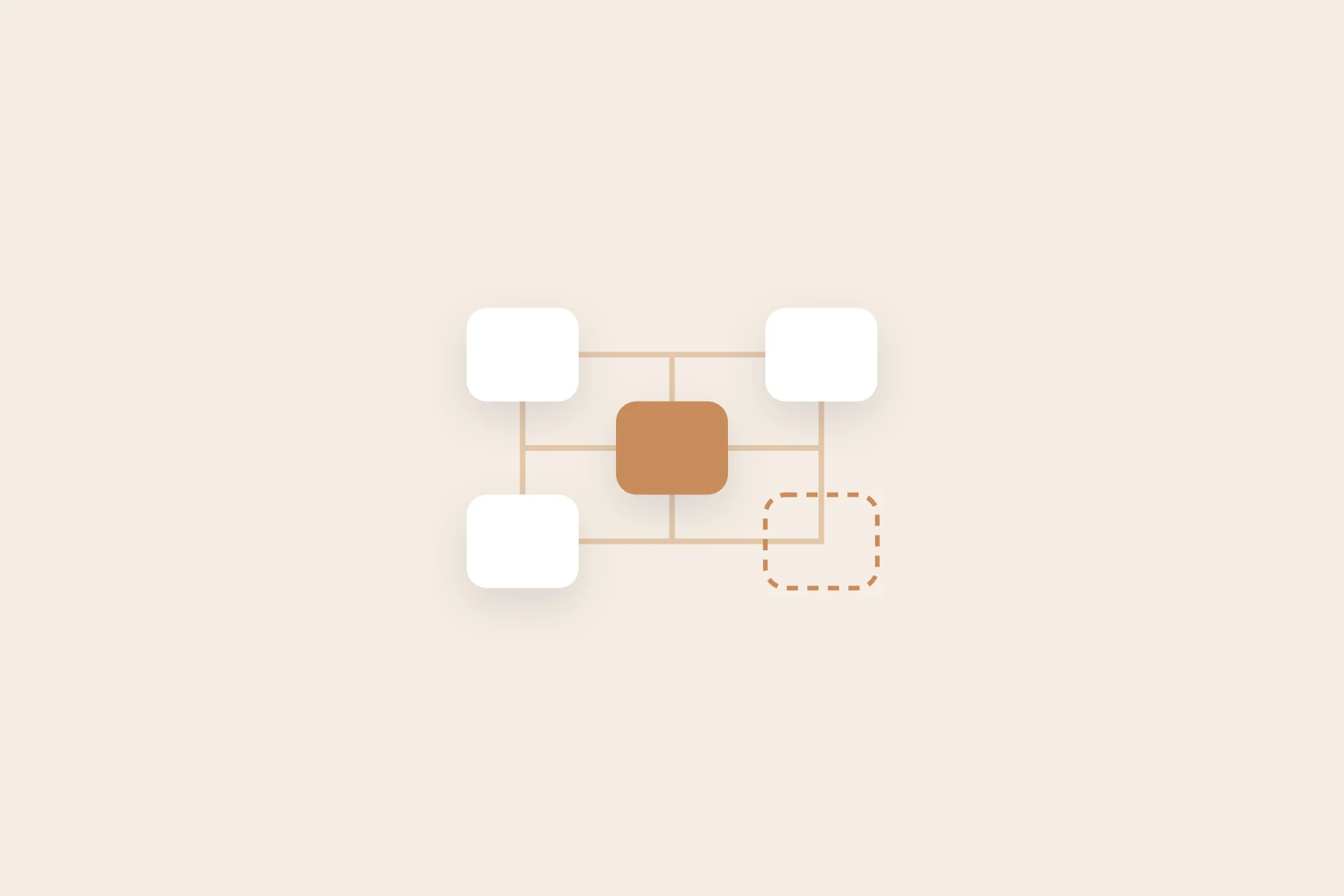
Meridian extends the Mendix visual language instead of replacing it.
It refines what developers already recognise rather than overwriting it. That meant developers could pick up new components without friction, and teams mid-project could adopt Meridian incrementally, one piece at a time.
What I gave up
This wasn't free.
Some directions I would have explored on a blank canvas were off the table. The system had to respect conventions I didn't choose.
For a designer, that's uncomfortable. For the product, it was the right call.
What it gave back
Meridian is now in production across four internal Mendix products, plus two projects outside Mendix.
After several months of adoption, my manager reported that design time per project went from around two months to three or four weeks, and development time from three or four months to one or two.
None of that happens if teams don't adopt the system in the first place.
Adoption is a design problem
The biggest lesson from building Meridian largely on my own is that a design system's real value isn't in its component library.
It's in the conversations it removes.
When everyone starts from the same foundations, nobody debates whether a button should be blue or teal. That time goes back into the actual problems.
And the fastest way to get there was to meet teams where they already were.
Related
Case Study
Blog
Articles of Interest